
Finding community as a chronically ill writer
Writing is often described as a lonely business, so what happens when we add chronic illness into the mix? Is it possible to connect with like-minded creatives when it’s a struggle simply to get through the day?
I have lived with the chronic energy-limiting conditions Myalgic Encephalomyelitis (M.E) and Postural Orthostatic Tachycardia Syndrome (POTS) since the age of sixteen. Due to these conditions, I experience debilitating fatigue, difficulty maintaining an upright posture (sitting or standing), chronic pain, concentration and word-finding difficulties, and sensory sensitivities on a daily basis. Much of my time is spent resting and I am predominantly housebound. I have always enjoyed writing and more recently, writing poetry – but as with any cognitive activity, this has to be carefully paced in order to avoid post-exertional malaise (PEM). PEM is a hallmark symptom of M.E and involves the worsening of symptoms – for example, intense fatigue, pain and cognitive dysfunction – that occurs after minimal physical or mental activity. When I’m in the zone creatively, it’s incredibly difficult to have the self-discipline to stop and rest. Most of the guidance directed at writers, for example, to wake in the early hours and start grafting, aiming for 2,000 words per day, is entirely alienating for someone like me.
Spending so much of my time at home, resting, can be isolating. I see Instagram posts about the latest open mic events or poetry writing retreats and feel a familiar pang of if only. I hear about the importance of writing groups and gaining feedback from others, and worry that my skills are stagnating. I have reached out to ask if events could include Zoom access, only to be met with various reasons why this isn’t possible. For example, I have been told that it is a chore to set up, or that it isn’t really worth it post-pandemic, when most people are back to attending in-person. But surely it is worth it and shouldn’t feel like a burden – we are talking about access and inclusion here – ensuring that people with all different needs are accommodated. Even if I am the sole attendee on Zoom, that event might be the highlight of my day, giving me something to look forward to during a groundhog week of symptom management and medical appointments. There are many barriers to disabled people attending events, such as inaccessible buildings, lack of BSL interpretation or hearing loops, lack of clean air and lack of rest breaks, to name but a few. When we create welcoming, inclusive spaces, everyone benefits, as we end up with a more diverse and therefore interesting group of attendees. The onus needs to be on non-disabled people to learn about and implement accessible practices; too often disabled individuals are made to feel like an annoyance simply for requesting a seat at the table.
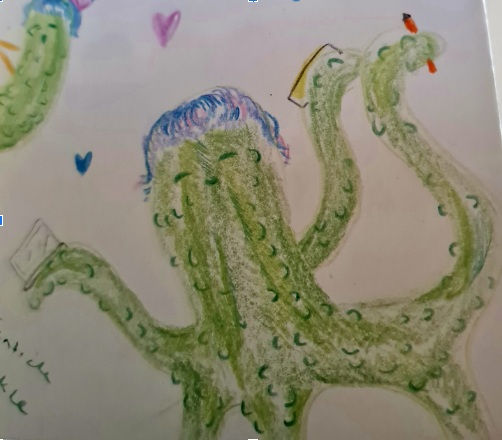
In 2025, I discovered Tentacles, a writing collective by and for disabled writers. Tentacles originated due to this need for safe and inclusive writing spaces for disabled people in the UK; its very name refers to the idea of reaching out to the disabled community. Tentacles run courses and master classes in poetry, fiction and non-fiction both in person and online. Every event is run on a pay-what-you-can basis and no one is turned away for lack of funds. I have attended two of their online poetry courses, one in Autumn 2025 and the other recently finished, in Spring 2026. Facilitators August and Neal create a very warm, welcoming and safe space, where people are free to show up as they are. It is fine to attend even on days when you can only listen in and pop a comment or two in the chat, and you are encouraged, but never pressured to share work. It is a relief to be in the company of others who understand brain fog and the challenges of simply attending an event when living with a disability or chronic condition. Tentacles provide BSL interpretation for sessions, a dedicated Discord channel for poetry chat and peer feedback, and soon, a published anthology from the 2025-26 programme. Submissions to the anthology are free and without the million and one rules that define many poetry competitions!
Beyond Tentacles, I have also attended some great workshops with the organisation Criptic Arts, a disability arts hub that offers support, growth and opportunities for D/deaf and disabled creatives in the UK. Their events often feature an open mic slot, providing a chance to be heard by others – this is vital when living with conditions that can make us feel invisible to the outside world. DIY Poets is a grassroots performance poetry collective, providing peer support and publishing opportunities in Nottingham. Their quarterly showcase nights are offered in hybrid format and feature a guest poet, DIY member performances and an open mic. It would be great to see more workshops and open mic events incorporate hybrid access – it benefits not just disabled people, but also carers, people who live far out from the city and others who may not be able to afford travel and parking costs.
It is harder to access publication opportunities when you are unable to network at in-person events. Personally, I have found Instagram useful in finding different avenues to put my poems out into the world. On a good health day, I can record and upload a spoken-word poem to my page. One of my love poems aired on the radio for Valentine’s Day via BBC Upload and my work was also featured in a digital exhibition at Nottingham Central Library. I am due to be published in I Once Was, a poetry anthology which captures the distortion of time and self that occurs for people affected by M.E. This is set for release on May 12th, International M.E Awareness Day and all profits will go to the Open Medicine Foundation. This is an opportunity I would not have learned about without social media; the editor of the anthology lives with very severe M.E herself. So often it is those who are themselves unwell working to amplify the voices of other chronically ill writers.
Writing with chronic, energy-limiting conditions is challenging and can feel lonely at times. I am very grateful to writing collectives such as Tentacles for uplifting and spotlighting disabled voices. Many times we hear that organisations want more disabled representation – this will only happen by listening to disabled people, learning from us and taking active steps to create accessible and inclusive spaces.
Eleanor Rose
Eleanor Rose (she/her) is a poet whose work explores life with chronic, energy-limiting conditions. Her poems have featured on BBC Upload, in a digital exhibition at Nottingham Library, in a Notts Poetry anthology and elsewhere. You can find more of her writing on Instagram @eleanor.rose.writes.

Links:
Criptic Arts - https://cripticarts.org/#0
DIY Poets – https://diypoets.co.uk/
I Once Was Anthology - https://www.amazon.com/Once-Was-Anthology-Myalgic-Encephalomyelitis-ebook/dp/B0GT74NHJB


Comments